
How to Keep Light Cloth Car Seats Clean in Greenville, SC
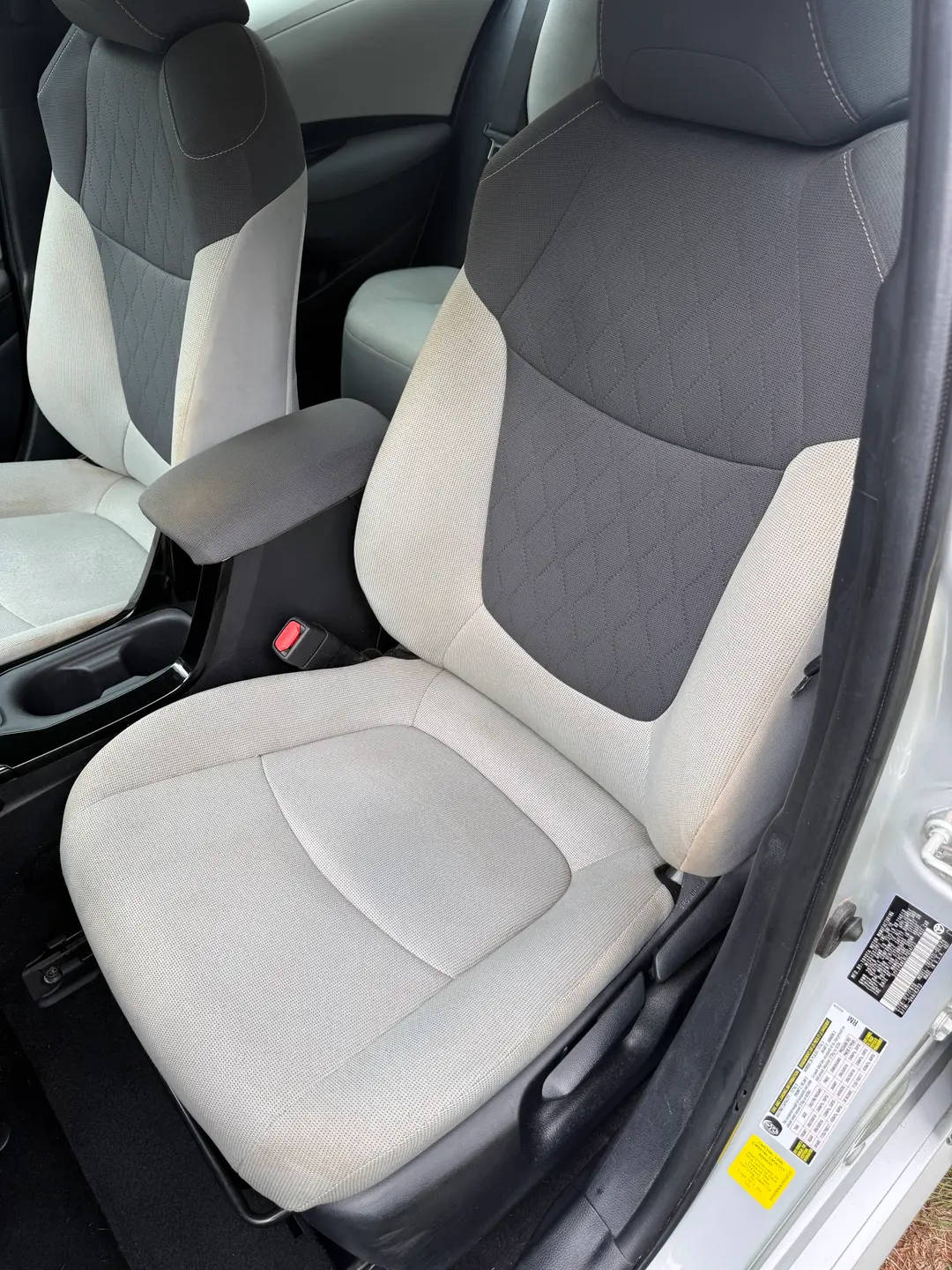
Light gray cloth seats look sharp on the lot and dingy a year later, and in Greenville that happens faster than most owners expect. Upstate summer humidity, red clay dust and two pollen seasons all settle into the same open weave. The fix is simple: dry-clean the seat often, treat spots the day they happen, and have the fabric extracted once the gray has worked its way down into the cushion.
Why do light cloth seats go dingy so fast in Greenville?
A cloth seat is a sponge with a pattern sewn on top. Dark cloth hides what soaks in. Light gray and beige show all of it, and Greenville gives them a lot to show.
Humidity. From June into September, a car parked on Main Street or in a Haywood Mall lot turns into a damp oven. You climb in after a walk through Falls Park and your back and legs press sweat and body oil into the seat. That moisture carries dirt down past the surface, and the heat sets it there. The result is the gray shadow you see on the backrest and the front edge of the cushion, the two places your body touches every trip.
Red clay. Upstate clay dust is fine enough to float. It blows in from construction sites along Woodruff Road and comes in on shoes, gym bags and kids’ knees. On light cloth it shows up as a faint orange-brown haze, worst on the outer bolster you slide across getting in and out.
Pollen. Greenville’s spring pollen coats cars yellow, and some of it comes inside every time a door opens. Pollen is sticky and holds onto fibers. Sit on it with damp clothes and it smears into the weave instead of vacuuming out.
The commute. An hour a day on I-85 or I-385 means the same seat, the same spot, the same pressure, every day. Light cloth wears its dirt where you sit, not evenly, which is why the driver’s seat almost always looks worse than the passenger side.
What can you do at home to keep light cloth seats clean?
Most of what keeps a light seat light happens between cleanings.
- Vacuum the seats, not just the floor. Use a brush attachment and work into the seams where the cushion meets the backrest. Clay dust and pollen sitting on top haven’t been ground in yet, and a vacuum gets them out.
- Blot spills right away. Coffee in a cupholder near Augusta Road becomes a stain by the time you get home if it bakes all afternoon in a hot car. Press a clean towel on it to pull the liquid up. Don’t rub: rubbing pushes the stain sideways and deeper.
- Use less water, not more. The biggest at-home mistake on cloth is soaking it. Water runs into the foam, takes the dirt down with it, and comes back up as a brown ring when it dries. A lightly damp microfiber and a fabric-safe cleaner beats a spray bottle emptied onto the seat.
- Let it dry with the windows cracked. In a Greenville summer a wet cushion in a closed car can start to smell musty. Dry it in a garage or on a clear day, not before an afternoon thunderstorm.
- Cover the seat for the dirty jobs. A towel over the seat after a muddy dog walk or a red clay ball field saves a lot of scrubbing later.
Our stain removal guide for Conestee goes deeper on red clay, coffee and pet stains on cloth if you’re fighting one specific spot.
When does a light cloth seat need professional extraction?
Home cleaning handles the surface. It doesn’t reach what has soaked into the foam underneath, and on a light seat that is usually the problem. A few signs you’re past what a vacuum and a towel can do:
- The gray shadow on the backrest and cushion comes back within days of wiping it.
- There’s a ring around a spot you already cleaned.
- The seat smells sour or musty after a humid week, even when it looks fine.
- The outer bolster has an orange tint that doesn’t move.
Extraction is the fix. A cleaner goes into the fabric, gets worked through the weave, and an extractor pulls the water and dirt back out instead of leaving it in the foam. That is the step a home spray bottle can’t do, and it’s why a professionally cleaned seat dries without a ring.
The seat in the photo at the top of this page is a light gray and charcoal cloth front seat we cleaned during an interior detail in Greenville. The light panels are the ones that show every trip, and they’re the ones extraction brings back.
What does it cost to clean cloth seats in Greenville?
Our Interior Detailing starts at $225. The Standard tier covers vacuuming and seat cleaning. The Premium tier adds seat and carpet shampoo, stain treatment and odor treatment. That’s the level most light cloth seats with a gray shadow or old spots need. Maybe the rest of the interior is fine and you only have one or two set stains on the seat. Then Stain Removal is From $200, and you can send photos for an exact price before we come out.
Every price is on our pricing page. We bring our own water and power anywhere in Greenville County with no travel fee, so the seats get cleaned in your driveway or your office lot while you work.
How often should light cloth seats be cleaned here?
For most Greenville drivers, vacuum the seats every couple of weeks and plan a full extraction once or twice a year. Good times are late spring, once pollen is done for the season, and late summer, after the humid months have pushed the most sweat and dirt into the fabric. If you have kids, a dog or a daily drive on I-85, the seats will tell you sooner: when the gray shadow shows up where you sit, it’s time.
Ready to get your seats back to the color they came in? Book an interior detail online in under a minute, or call or text (864) 900-9133.